PAT testing · NAPIT approved · Worcester Park, KT4
PAT testing and safety checks in Worcester Park
Kettles, heaters, extension leads and office computers get knocked, dropped and plugged in every day, and the damage isn’t always visible. We PAT test appliances and check smoke alarms for landlords, shops, offices and households in Worcester Park and nearby, including Sutton, Cheam, Ewell and Banstead.
✓ Free quote
✓ Inspected and tested
✓ Lets, shops and offices
Approved, insured and local
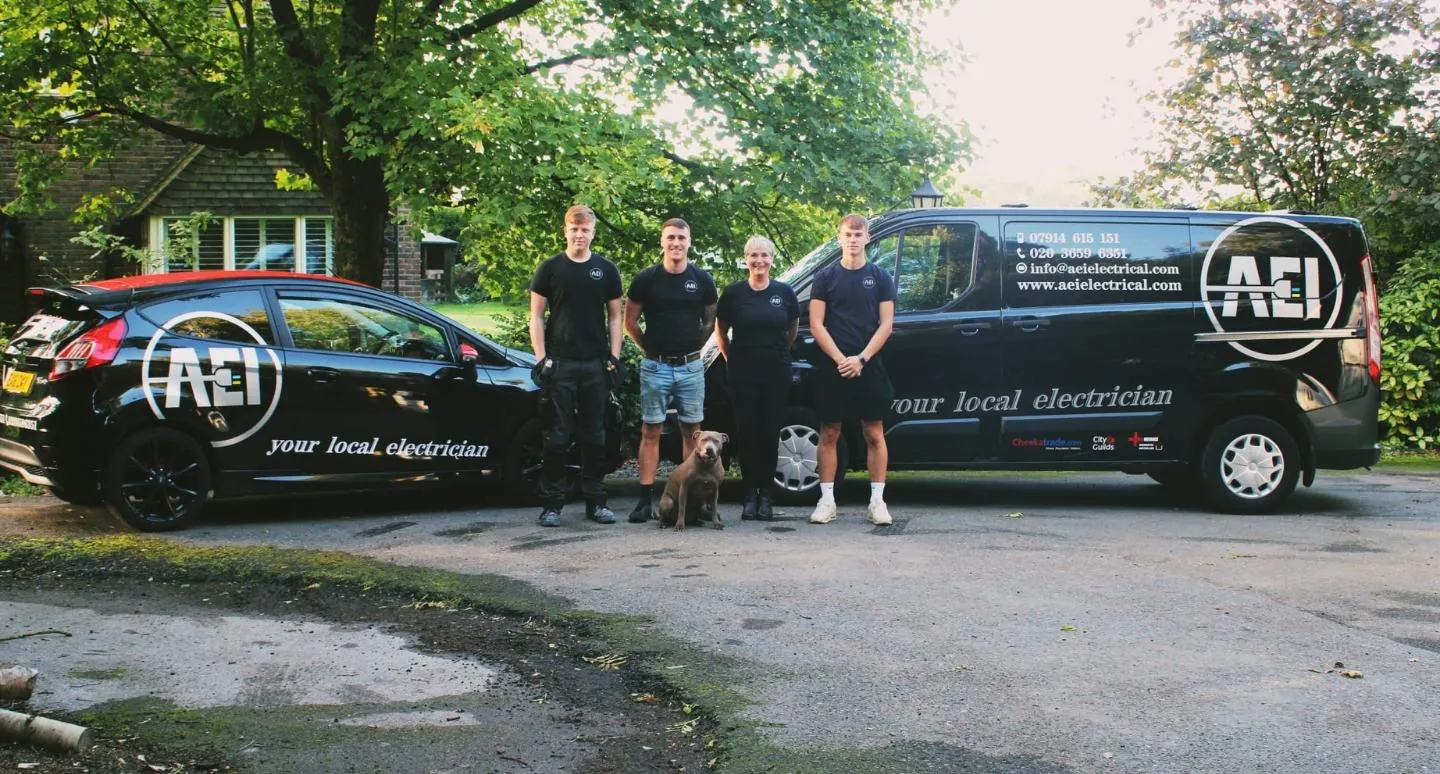
AEI Electrical is run by Matthew Ayley, with Taylor on the team. With more than ten years in the trade, we look after landlords, shops, offices and households across South London and Surrey, from PAT testing and smoke alarms to the wiring behind them.
NAPIT approved
Qualified inspectors
£2m insured
Public liability cover
5.0 on Google
100+ reviews
Based in Worcester Park
10+ years’ experience
What it is
What is PAT testing?
PAT stands for portable appliance testing: checking that equipment with a plug is safe to use. It starts with a careful look at the plug, lead and casing, then a dedicated tester checks what you can’t see, such as whether the earth connection is sound and the insulation is holding.
It covers kettles, toasters, microwaves, fridges, washing machines, heaters, lamps, computers, extension leads and power tools. It doesn’t cover the fixed wiring in your walls. That’s an EICR, a separate inspection.
HSE says most faults on appliances can be spotted by eye, but some only show up on a test, which is why a proper check does both.
What you get
Every item checked
You’ll know which items passed, which failed and why, and what to do about anything that didn’t pass. Nothing unsafe is left in use without you knowing.
The labels and records you get are set out on your quote, so you can show a tenant, insurer or letting agent that your equipment has been checked.
1
Inspect
2
Test
3
Explain
Good times to check
Signs it’s time for a safety check
A new tenancy starting
Check supplied appliances and alarms before the keys go over.
Your insurer or agent is asking
They may want proof your equipment has been checked.
Office kit no one has checked
Kettles, heaters and leads that get used every day.
Damaged plugs or leads
Cracked casings, taped-up cables or scorch marks.
Adaptors plugged into adaptors
Daisy-chained extension leads overload easily.
A chirping or old smoke alarm
Most need replacing after about 10 years.
Who books a safety check?
Most of our PAT testing is for people who supply equipment that someone else uses.
Landlords and letting agents
Fridges, washing machines, kettles and lamps you supply with a let, plus smoke and carbon monoxide alarms checked before each new tenancy.
Shops and offices
Computers, printers, heaters and the staff kettle. HSE advises a routine based on how much each item is used and moved.
HMO landlords
HMO licences require supplied appliances to be kept safe, and the council can ask you to show it.
Homeowners
Older appliances, garden tools and well-used extension leads, or peace of mind before a new baby or an older relative moves in.
PAT test or EICR: which do you need?
A kettle, lamp or washing machine you supply
PAT test
Extension leads and adaptors
PAT test
Sockets, switches and light fittings
EICR
The fuse board and the wiring in the walls
EICR
Smoke and carbon monoxide alarms
Safety check
Short version: if it has a plug, it’s a PAT test. If it’s fixed to the building, it’s an EICR. Need both? Ask about combining them.
From booking to results
How a PAT visit works
1
List your items
Call or use the form. A rough count helps.
2
Pick a time
One that suits your staff or tenants.
3
Look first
Plugs, leads and casings checked for damage.
4
Test
Each item tested to suit how it’s built.
5
Deal with fails
Faulty items taken out of use and explained.
6
Your results
A pass or fail for every item we check.
How long it takes
Depends on the count
A flat with a few appliances is quick; an office full of equipment takes longer. You’ll know the timing when you book.
Before your PAT visit
✓
Gather portable items in one place, or note where they all are.
✓
Warn staff that computers will be shut down briefly.
✓
Tell tenants the date and which items are yours to test.
✓
Make sure we can reach every smoke and CO alarm.
✓
Have any old test records to hand.
✓
Mention anything that has sparked, smelled hot or tripped the power.
What we check on each item
Every appliance gets a hands-on inspection before any test. We look at:
✓
The plug, for cracks, burn marks, a loose cover or the wrong fuse
✓
The lead, for cuts, kinks, tape repairs or bare wire
✓
The cable grip, so the outer sheath is held firmly where it enters the plug
✓
The casing, for damage, missing screws or signs of overheating
✓
Where it’s used, including wet areas, trailing leads and overloaded sockets
✓
The test itself, earth and insulation, to suit the type of appliance
Brand-new equipment shouldn’t need a formal test. A quick look for damage from delivery is enough until its first routine check.
Why choose AEI
✓
NAPIT approved, so our work is checked and our electricians are qualified
✓
Over 10 years’ experience with domestic and commercial electrics
✓
£2 million public liability insurance
✓
Local to you. We’re based in Worcester Park, KT4, so most jobs are a short drive away
✓
Honest quotes. We only quote for the work that actually needs doing
✓
One team for everything. All our work and parts are guaranteed
✓
5.0 on Google from 100+ reviews
No surprises
Priced before we visit
The cost depends mainly on how many items need testing, and whether smoke alarms or small repairs are part of the visit. Tell us roughly what you’ve got and we’ll send a free quote in writing before we book.
Before we visit
Free quote
Every item
Pass or fail
Faulty kit
Explained
All our work
Guaranteed
Pass, fix or fail
Every item we look at ends up in one of these four groups, and you’ll know which.
We’ll never leave something we know is dangerous plugged in without telling you.
Pass
Passed
Safe to keep using. Check it again at an interval that suits how it’s used.
Fix
Simple fix
A wrong fuse or damaged plug can often be put right, then retested.
Fail
Failed
Unsafe and not worth repairing. Take it out of use and replace it.
New
Brand new
Usually just a look for delivery damage, until its first routine check.
Landlord alarm rules
Smoke and CO alarm rules for landlords
In England, landlords have had to meet four alarm rules since October 2022.
In force since
1 Oct 2022
Each floor
A smoke alarm on every storey with living space
CO alarm
In rooms with a fixed boiler, fire or stove
Day one
Alarms checked working when each tenancy starts
Repair
Faulty alarms fixed or replaced once reported
Gas cookers don’t count for the CO alarm rule. Councils can serve a notice on landlords who don’t comply, with a penalty of up to £5,000 if it’s ignored.
Landlords
Letting a property?
The gap between tenancies is the easiest time to check what you’re handing over. On a landlord visit we cover:
✓
Every appliance you supply, with a pass or fail for each
✓
Smoke alarms tested on every floor
✓
CO alarms checked where there’s a boiler, fire or stove
✓
Worn plugs and leads flagged before tenants move in
✓
Wiring check due as well? Ask about an EICR
“EICR safety inspection certificate carried out in a quick and professional manner. Very informative of any other work needed.”
Robin Tresadern, Google review
Smoke alarms
Smoke alarms fitted and tested
A working smoke alarm on every floor buys you time to get out. Fire services advise testing them every week and replacing the whole unit about every 10 years, because the sensor wears out.
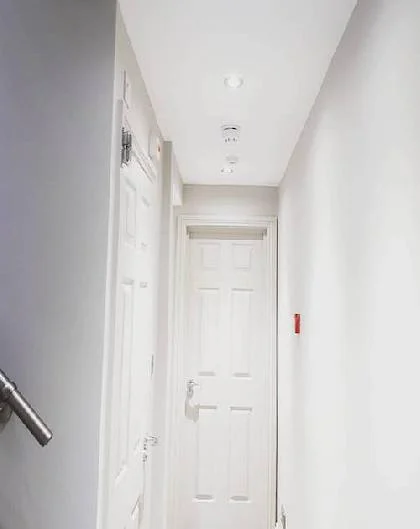
We test the alarms you have, tell you if any are past their date, and fit new ones where they’re needed, like the ceiling alarm in this hallway we wired in a local home.
Customers on how we work
5.0
from 100+ Google reviews
“I’ve had my fair share of tradesmen who treat 9:00 AM as a vague suggestion, so AEI was a massive breath of fresh air. They turned up exactly when they said they would.”
Jesse Hon, Google review
“Great Service, called in after a bad EICR report when moving into a new house. They were very flexible and helped us come out the other side after works were completed in budget.”
Alan Whitehall, Google review
We turn up when we say.
It’s the thing our customers mention most. Read what people across Worcester Park and Surrey say.
Related services
Other checks we carry out
The wiring in the walls
EICR safety checks
Sockets, fuse board and cables inspected, with a written report.
Learn more →
Something keeps tripping?
Fault finding
Appliance or wiring faults traced and repaired.
Learn more →
No RCD protection?
Fuse board upgrades
Modern boards that cut the power fast if a lead or appliance fails.
Learn more →
Local coverage
PAT testing across Worcester Park, Sutton and Surrey
From offices in Sutton to rental flats in Epsom and shops in Cheam, we test appliances across South London and Surrey. We’re based in Worcester Park, KT4, so fitting in a visit is easy.
Worcester Park
KT4 · our base
Sutton
SM1, SM2
Cheam
SM2, SM3
New Malden
KT3
Epsom
KT17 to KT19
Ewell
KT17, KT19
Banstead
SM7
Wallington
SM6
Tadworth and Kingswood
KT20
Not listed? We cover most of South London and Surrey. Call to check.
PAT testing questions people ask us
Straight answers. If yours isn’t here, call and ask.
Need a quick answer?
Call 07914 615151
How much does PAT testing cost?
Mostly it depends on how many items there are, and whether you’d like smoke and CO alarms checked on the same visit. Give us a rough count and we’ll send you a free written quote.
Is PAT testing a legal requirement?
Not by name. The law says equipment used at work must be kept safe, and HSE is clear it doesn’t set how or how often. Testing alongside visual checks is one of the clearest ways to show you’ve done that.
Do landlords have to PAT test?
Not by law in England, but anything you supply with the property must be safe to use. A test between tenancies gives you a record that it was checked. HMO licences, and the rules in Scotland, go further.
How often should appliances be tested?
It depends on the item and where it’s used. HSE contrasts a power tool on a building site, which needs frequent checks, with a lamp in a hotel room, which needs far fewer. Kit that’s moved and used a lot, like a kettle or vacuum, needs checking more often.
What’s the difference between a PAT test and an EICR?
A PAT test checks equipment that plugs in. An EICR inspects the fixed installation: the wiring, sockets, switches and fuse board. Many landlords have both done, and our EICR page explains that side.
What happens if an appliance fails?
We tell you why and make sure it isn’t used again until it’s sorted. Some faults, like a wrong fuse or a damaged plug, can be put right; others mean the item should be replaced.
Do new appliances need testing?
Usually not. HSE says new equipment should arrive safe, so a quick look for damage is enough until its first routine check.
Who can carry out PAT testing?
Someone competent to do it. Trained staff can do simple visual checks, but combined inspection and testing needs the right tester and the know-how to read the results. If we find a problem with the wiring too, we’re NAPIT approved to put it right.
Where should smoke alarms go?
At least one on every floor, ideally on the ceiling of hallways and landings. Landlords in England must fit one on every storey with living space, plus a CO alarm in any room with a fixed boiler, fire or stove.
How long do smoke alarms last?
About 10 years, and most show a date on the side or back. Press the test button weekly, and replace any alarm that’s past its date or keeps chirping after a new battery.
Book your PAT test
Tell us roughly how many appliances you have, where they are, and whether you’d like smoke and CO alarms checked too. We’ll come back to you with a free quote and a date.
Mon–Fri 7 am–7 pm · Sat–Sun 9 am–2 pm. AEI Electrical, Worcester Park, KT4.